Archive Page 8

Bachata and Edilio Paredes

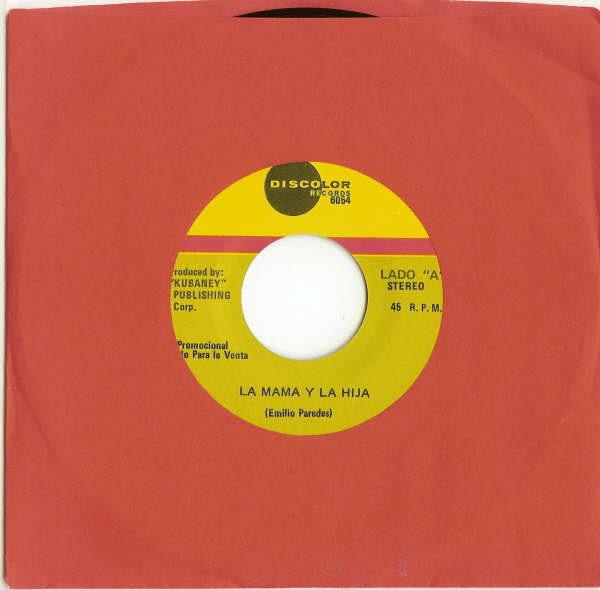
1. Edilio Paredes: La Mama Y La Hija

Bachata or Bolero Campesino (peasant love song) is a style of guitar music that is often overlooked when you think of other more popular Latin American musical genres. In fact, for a long period in the Dominican Republic (where it originated) it was marginalized, denigrated, and usually associated with the lower classes.

The music began in the rural areas as a romantic bolero style music. Early Bachata often had themes of heartbreak, deception, and love lost.  However, things began to change for the Bachata movement with the death of dictator Rafael Trujillo in 1961, whose family had a monopoly on the entire Dominican music industry. It was at that point where the Bachata recording industry and the music itself began to flourish.  And it had evolved in that era with a more rhythmic and dancable beat borrowing from Merengue and Son.  

However, it appears that there was a backlash to Bachata in the 70’s where it again was stigmatized and barred from the higher class venues. Most songs from this era dealt with the musicians environment of uncivil behavior, drunkenness, and prostitution. Songs of the time were ripe with sexual innuendo (double sentido) . Although super popular in the Dominican Republic, these songs were thought of as vulgar and ignorant by the mainstream society. 

This 45 from Edilio Paredes is a perfect example of Bachata at this time. You can already see where this song is going with La Mama Y La Hija (the mother and the young daughter). Its basically a tale of two friends liking, enjoying, and marrying both the mother and daughter.
2. Edilio Paredes: La Gozadera

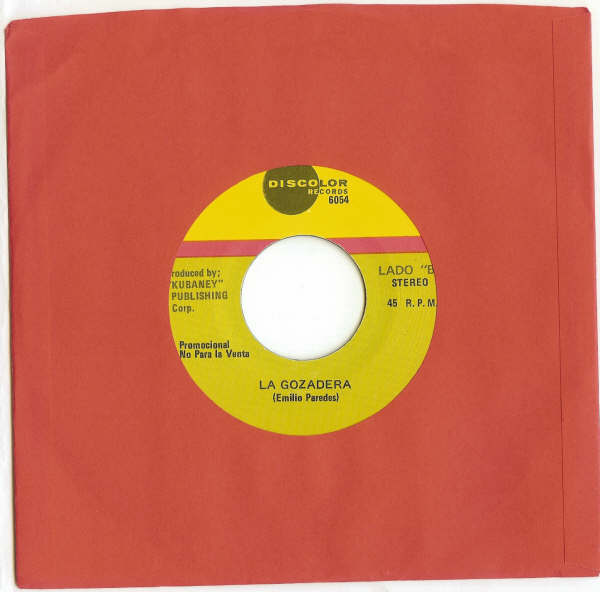
A great two sider from Edilio Paredes, who is considered by many as the most influential singer, guitar player, arranger, and the person who most influenced these more uptempo changes of Bachata in the mid 1970’s .

Born in the town of La Galana, near near San Francisco de Macoris, Edilio Paredes began his musical career young and still still plays today. At age 13 he moved to the capital of Santo Domingo and got a job working at a record store/record label which launched his music profession.

You have to excuse me but Dominican Spanish is sometimes difficult for me to understand due to the idiomatic expressions and dialect. But what I do know or what I sense, is that this song is ripe with all sorts of innuendo.  If anyone from the Dominican Republic would like to translate or thinks my paraphrasing sucks, just let me know. The song La Gozadera (fun loving time?) is a story about a guy who has a problem with his girl, whose love is over, and whose solution is to party and womanize. Amazing, amazing, amazing 45. 


DJ Lengua

1. Dj Lengua: Cumbia Squares

We just released the 7 song debut ep from Dj Lengua on Discos Unicornio. Now Eamon is not only a business partner, but my best friend. So I think it would be unfair for me to write anything more about this. If anyone wants to take a crack at it, word!

Otherwise, I’ll just post my personal favorite tune on this ep and i’ll post turntable lab’s review of Dj Lengua’s efforts. Hit me up if you want a copy. It can also be found at turntablelab.com & unicorniorecords.com

Discos Unicornio

(From Turntable Lab) Killer debut from LA’s DJ Lengua, aka visual artist Eamon Ore-Giron. Lengua’s dropped some mixtapes in the past and is well known at the infamous Club Unicornio nights in the Bay, but this EP finds him really flexing his skills, foremost of which is the ability to fuse loops from traditional Latin tunes and cumbias with chunky, straightforward beats to create seriously infectious tracks. “Cumbia Squares(1)” ramps up with tasty, dusty drums and circular flute / xylophone licks before the repeated “cumbia cumbia cuuumbiiiaa!” chants and accompanying guitar coda seal the deal; the L Pacheco remix(2) sticks to the original’s blueprint, extending the track for your mixing pleasure while dubbing things out a bit. There’s a little boom bap, organ stabs and some deep percussive flourishes on the upbeat “L Dolor(3)” and some just plain lovely stuff in “L Pacheco(4),” but probably the most immediate track here is the guitar driven “Mi Camino(5).” Tucked away at the end, don’t skip the 7+ minute bloopy minimal electronic version of “Low Rider,” entitled “Lowrider Mambo(6).” 7 tracks; 30 minutes. Recommended.

–Chris Lemon-Red, Turntable Lab

Mi Cacharrito

1. Manolo Muñoz: Mi Cacharrito 

The song is a rendition of country singer/songwriter J.D. Loudermilk’s “Road Hog“. Performed by actor/musician Manuel Muñoz, El Esqueleto (The Little Skeleton). “Mi Cacharrito” (my little car) is basically a story about a guy who needs to get his car repaired so he can go pick up some girls. 

Now Manuel Muñoz is considered by many as the godfather of Mexican Rock & Roll. From the late fifties he was cranking out tons of rock & roll cover songs until the end of his carear as a ballad/mariachi singer. I guess that’s where Mexican pop singers go when they’re through being popular, they become Mariachi singers. He also appears in numerous Mexican movies (he reminds me of the Mexican version of Jerry Lewis for some reason or another). Anyway, this is probably one of my favorite cover songs he did. Short and sweet with a garage rock feel to it.

2. Roberto Carlos: Mi Cacharrito 

Another great version. Both songs seem to be emulating the sound of a car traveling with the rhythm of the music. And even though Brazilian singer/actor Roberto Carlos’s tune is a bit different than Manolo’s, both do share a slightly similar career.

The one legged (he wears a prosthesis) Roberto Carlo also started as a Brazilian pop rock & roll singer/actor and is considered by many as O Rei (the king) of that genre. He also is known for his romantic ballads now that he’s in the twilight of his musical career. Please not that it is common that Brazilian musicians sing in Spanish and even English (i.e. Nelson Ned, Caetano Velso, ect. ect.), maybe to obtain a larger listening audience.  

“There exisits 1000 women who want to go out with me, but it is only becuase of my car”

Los Zheros

1. Los Zheros: Descarga De Los Zheros

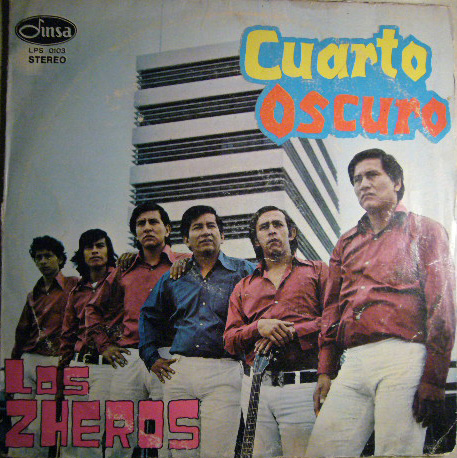
I could’nt find any info on Los Zheros (the zeros) or it’s members. I searched the inter-net, other audio blogs, even Peruvian message boards. Not one scrap of information besides the liner notes. Maybe it is an indication of how short lived the band was? Or maybe it’s just the shroud of mystery that is part of Los Zheros’ legacy?

As indicated on the back, guitarist and vocalist Chocho Alvan seems to be the band leader accompanied by his two brothers and three other band mates. Their ages range from 16 to 22 at the time this debut album was made.

There seems to be an emphasis on their academic professions and the school each member is attending. Maybe this record was a youth project of some sort? Anyway, definitely one of my favorite records from Peru. “Cuarto Oscuro” (dark room) is a total crossbreed of cumbia, garage/rock, and descarga all done in the distinct guitar heavy Peruvian style. The rough edged quality of these songs makes for an overall awesome sound. I could care less if these guys were 16 or 60.

Cardboard Houses

1. Los Bukis: Casas De Carton

I first heard this song while living in Nicaragua in 1993. At the time I probably would never have guessed that is was Los Bukis performing this song, let alone Marco Antonio Solis who wrote it.

It was the romantic ballad like their 1975 debut “Falso Amor” (a. side)  which I am aware of, what made Los Bukis so famous in Mexico, and a style of music that became popular all over Latin America. But Los Bukis really exhibits a progressive side to themselves with the song “Casas De Carton” (cardboard houses).

 This tune is a lament to the people of Mexico (and beyond) who live in shanty towns. Sometimes called ciudades perdidas (lost cities), the inhabitants tend to build their homes with anything they can find: scrap metal, plywood, cardboard boxes.  And from what I understand of Mexican history, it was in the 1970’s where large metropolitan areas began to see this phenomenon on a much bigger scale. Irregardless, the song demonstrates a slightly revolutionary Los Bukis when they first began. The song starts out with the words; “You’ll never believe this, but there are schools for dogs where they recieve an education”

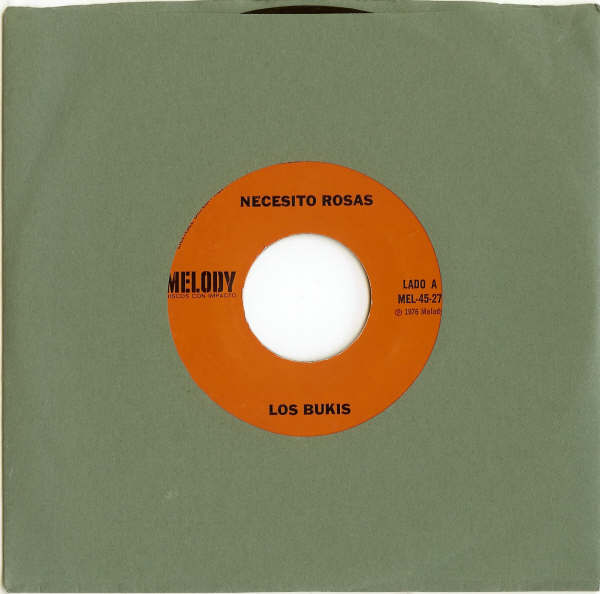
 2. Los Bukis: Necesito Rosas

I threw this one in for good measure. It’s pre-banda romantic love sounds like this that made it for Los Bukis. This song is pretty tame compared to first one. I guess you can’t always be political. Necesito Rosas (I need roses) is an uptempo ballad about a guy who needs roses for his sweetheart. Where is the flower lady when you need her?